Flaming Star Nebula
Imaged in narrowband filters from my suburban driveway. This object lives up to its name with the right color mappings!
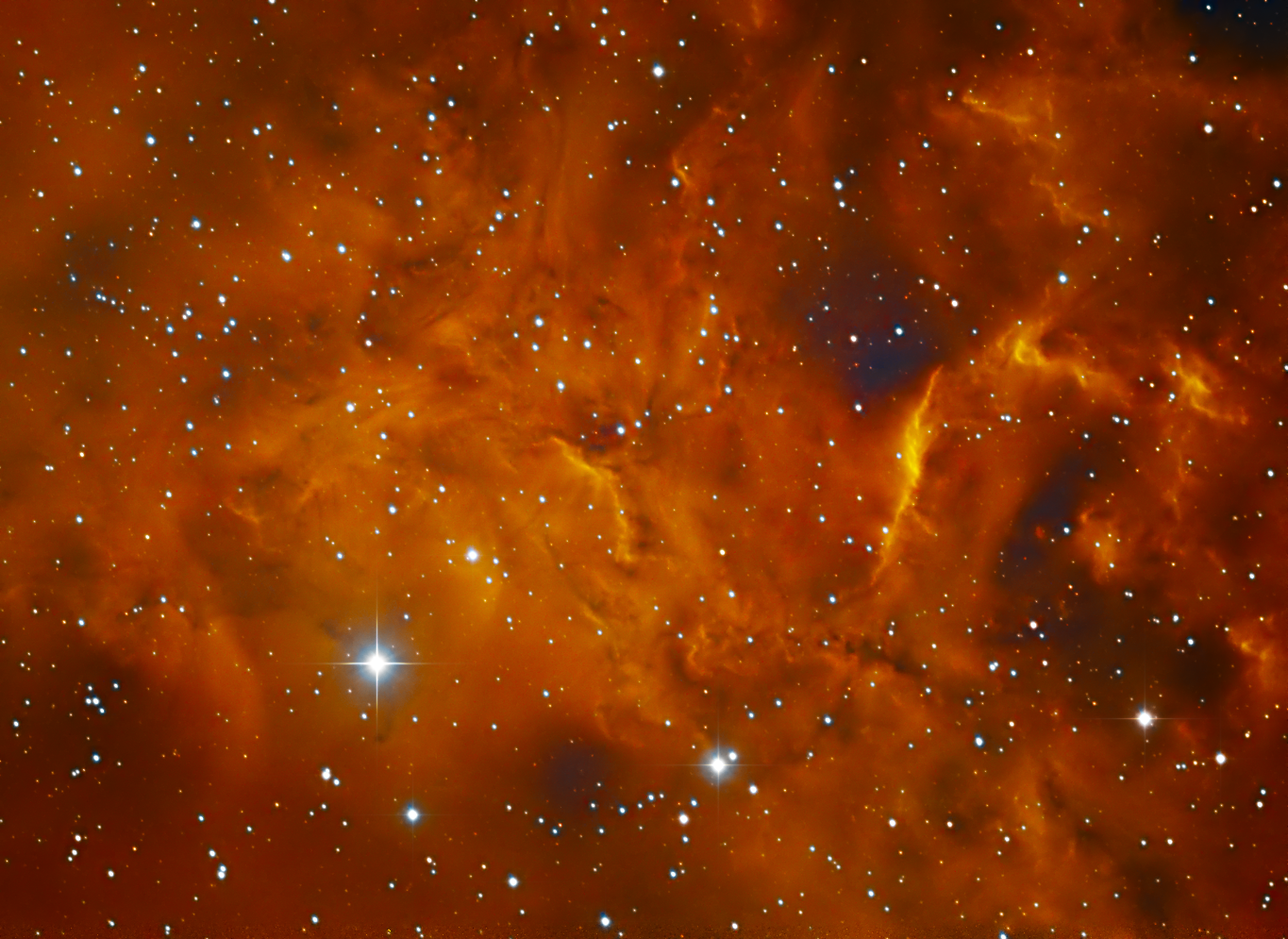
Imaged in narrowband filters from my suburban driveway. This object lives up to its name with the right color mappings!
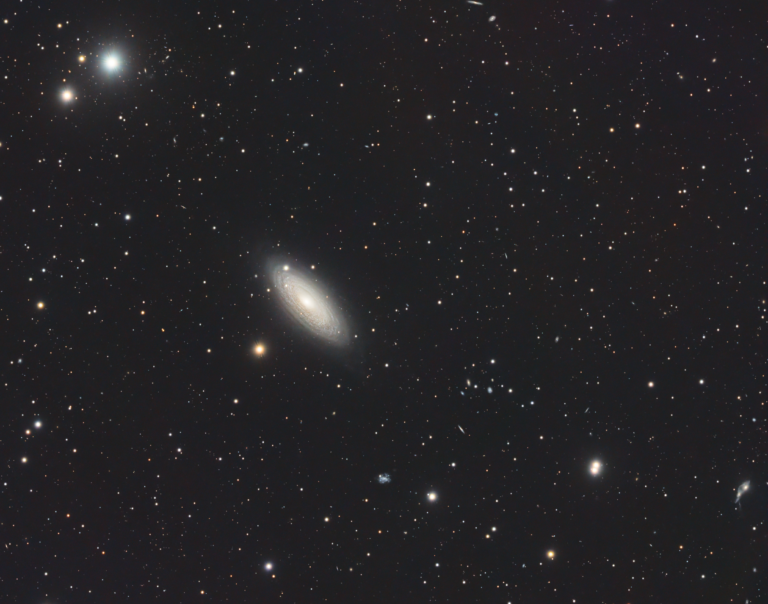
This is a somewhat obscure target; at 46 million light-years distant, it’s hard to capture much detail on it from Earth. But that’s what makes it interesting and challenging! Located within the constellation Ursa Major, this is a flocculent spiral galaxy notable for its massive central core. Look around in the background, and you’ll find…
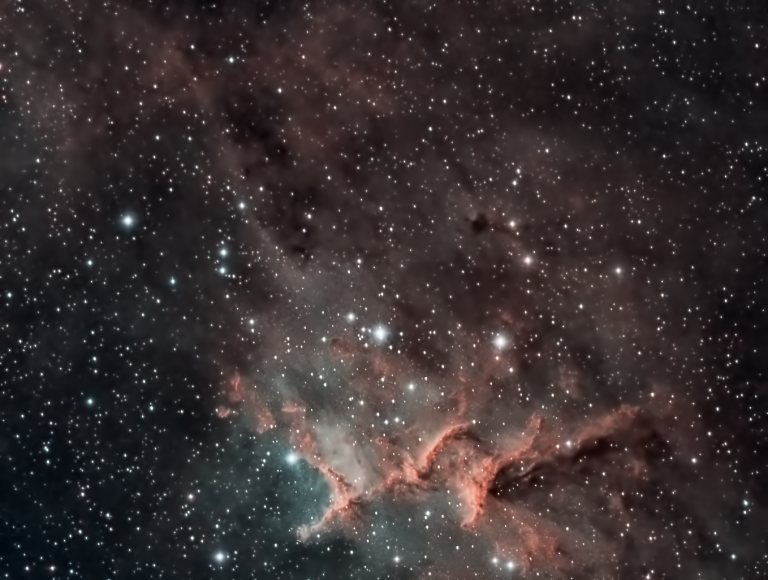
This young star cluster inside the Heart Nebula is lighting up the clouds of gas from which it formed. 3 hours of narrowband exposure from my suburban driveway.
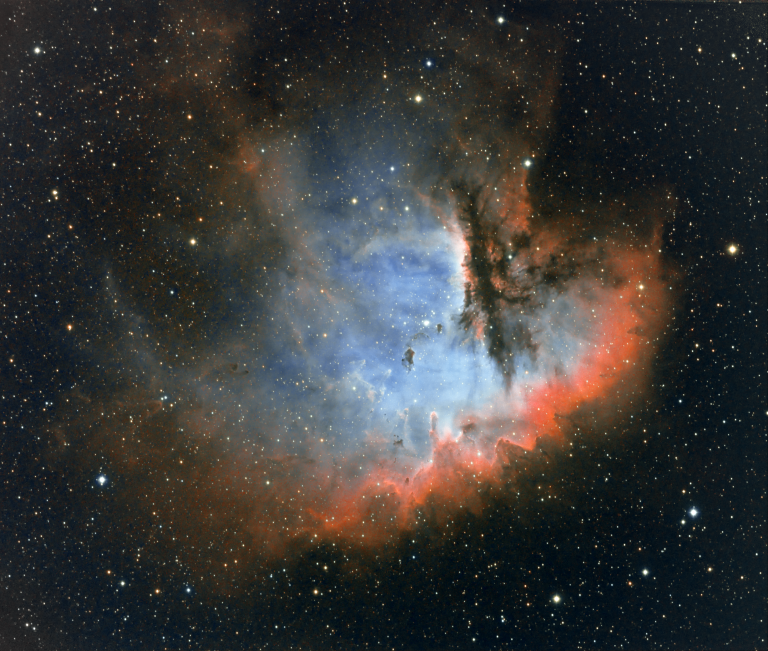
This gorgeous nebula, formally known as NGC281 in the constellation Cassiopeia, goes by the informal name of “The Pac-Man Nebula.” I don’t see a Pac-Man. I think it’s a case where if you look at it through a telescope with your eyes, you only see the brightest parts – and then, maybe it looks a…
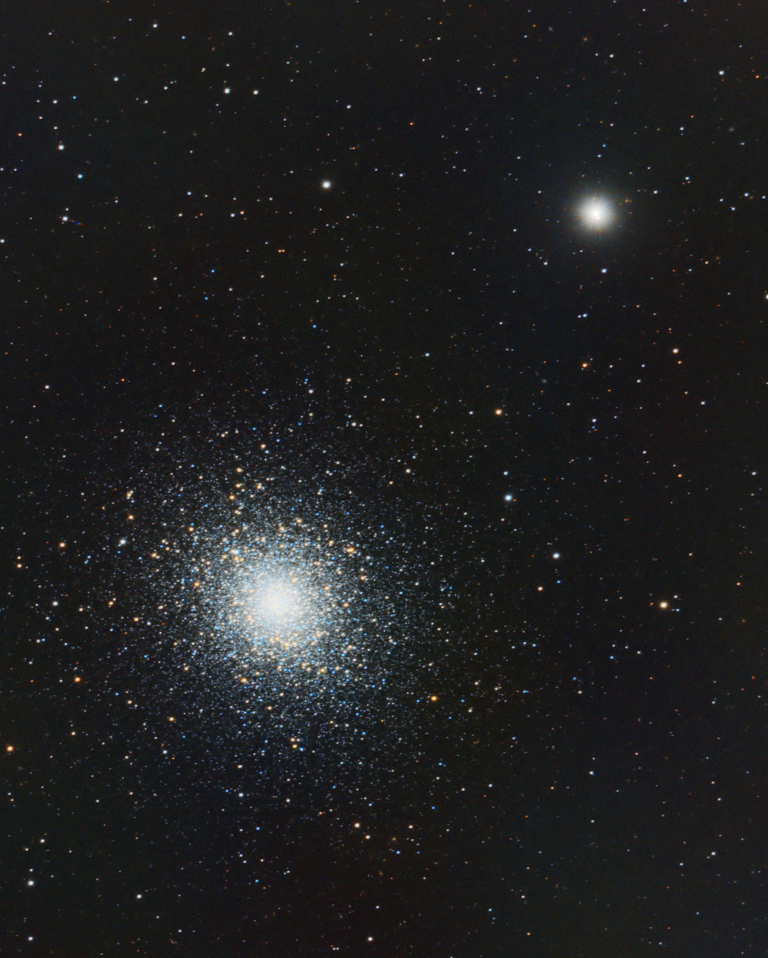
As we enter summer and the Earth starts pointing us back into the plane of the Milky Way and its many nebulas, we’re nearing the end of globular cluster season. M5 seems a fitting one to end on this year; there’s nothing terribly remarkable about it, other than I think it’s pretty. It’s located about…
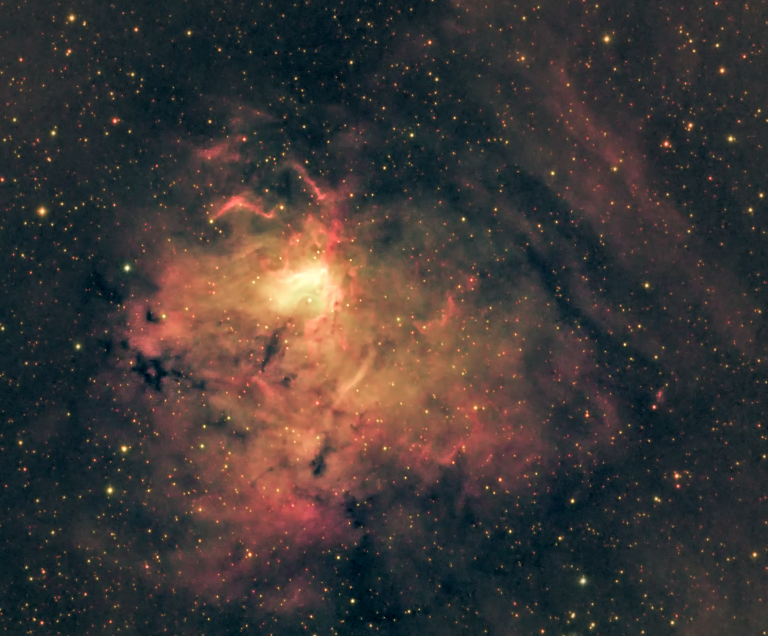
This dim nebula in the constellation Perseus has no name, apart from its catalog numbers NGC 1491 and LBN 704. I think it deserves one. It reminds me of the Bubble nebula – if you look closely, you’ll see a “bubble” at center being created from the stellar wind of the hot star that is…
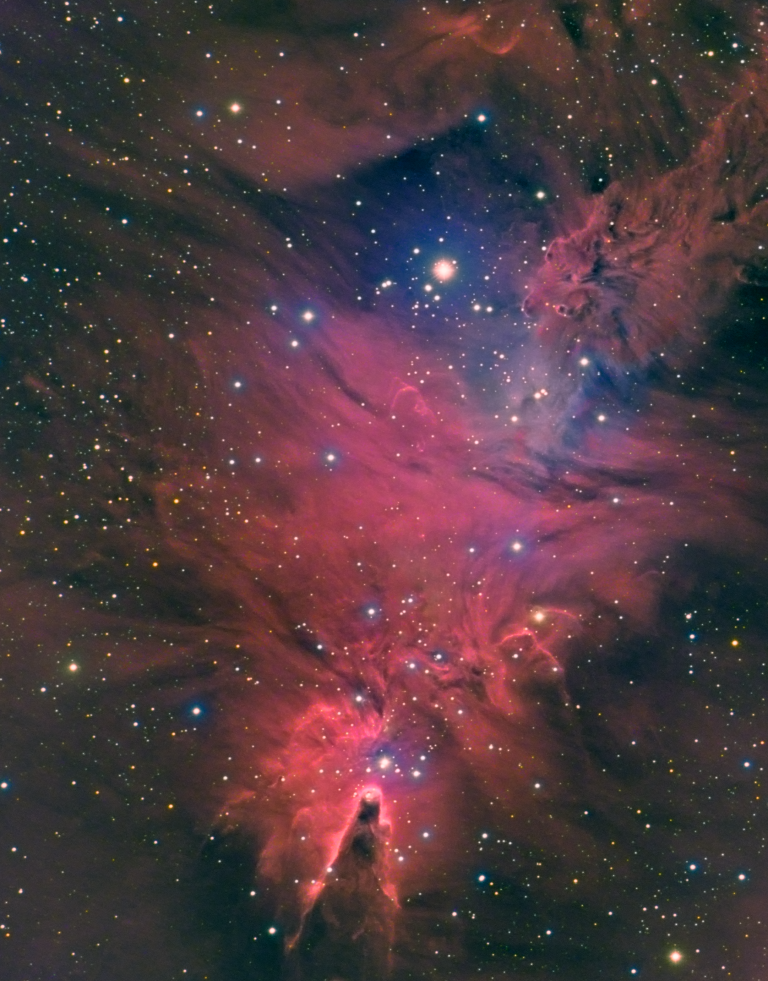
This image contains a few things! At the bottom is the Cone Nebula, at the upper-right is the “Fox Fur Nebula”, and in the middle is the “Christmas Tree” star cluster… you have to flip the image upside down to see that one. It’s a gorgeous region of active star formation in the constellation Monoceros….