Similar Posts
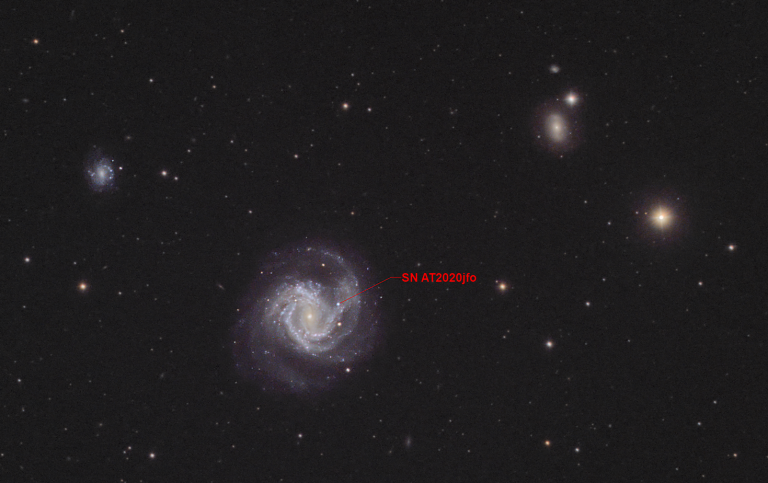
A Supernova 50 million light-years away!
Highlighted here is a recently discovered supernova in the galaxy M61, over 50 million light-years away! This exploding star outshines the entire core of its own galaxy, and many of the much closer stars seen within our Milky Way. The sheer power of this stellar explosion is unfathomable. It’s 50 million light-years away, which means…
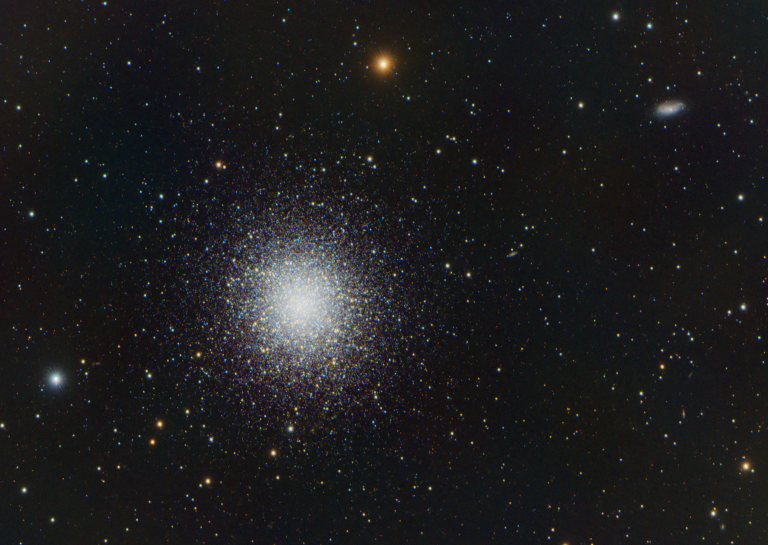
Revisiting M13 in Hercules
M13 is one of the most photogenic and popular globular clusters, and it’s pretty easy to see with nothing more than a pair of binoculars if you know where to look! But it’s even prettier with a long exposure – this is about 3 hours of exposure time. Blow it up to full size, and…
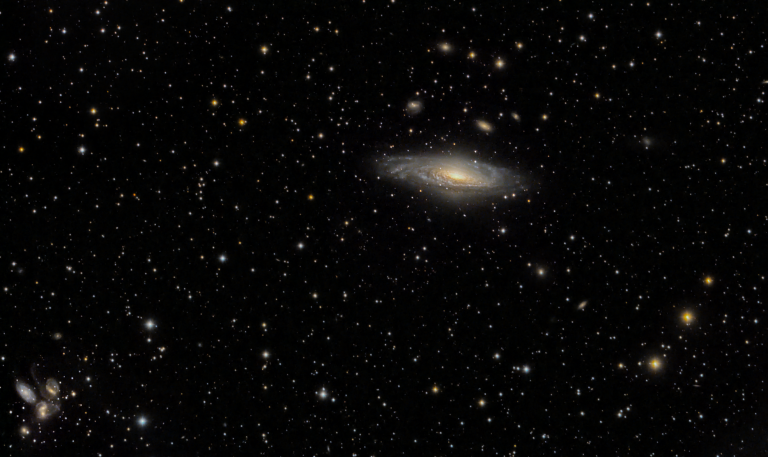
A bunch of galaxies in Pegasus.
There are two different clusters of galaxies in this image – the large galaxy you see is NGC 7331, part of the “Deer Lick Galaxy Group.” The smaller galaxies you see surrounding it (sometimes called “The Fleas”) are actually about ten times further away than NGC 7331. In the corner, you’ll see “Stephan’s Quintet,” a…
Light pollution: dealing with it.
(Image credit: ddmitr, iStockPhoto.com) Every picture on this site was taken from a suburban driveway in a “red zone” on the light pollution map, literally underneath a streetlight. Every year more subdivisions and apartment buildings spring up in my city, and light pollution from the metro Orlando area just keeps getting worse. There are four…
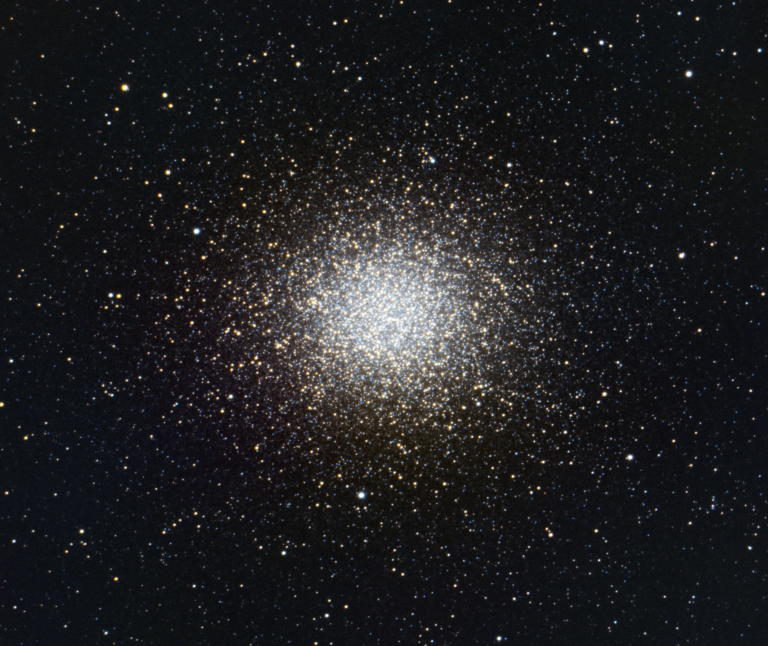
Omega Centauri – the biggest globular cluster, or is it something else?
This object was a real challenge to image. From central Florida, it only rises 13 degrees above the horizon, deep within the light-polluted murk of my Southern sky. Omega Centauri is a Southern hemisphere object, so capturing it from the Northern hemisphere requires effort. It’s worth it though – this is one of the most…
Melotte 15
This young star cluster inside the Heart Nebula is lighting up the clouds of gas from which it formed. 3 hours of narrowband exposure from my suburban driveway.