Thor’s Helmet
An interesting emission nebula 30 light years across. Imaged with narrowband filters.
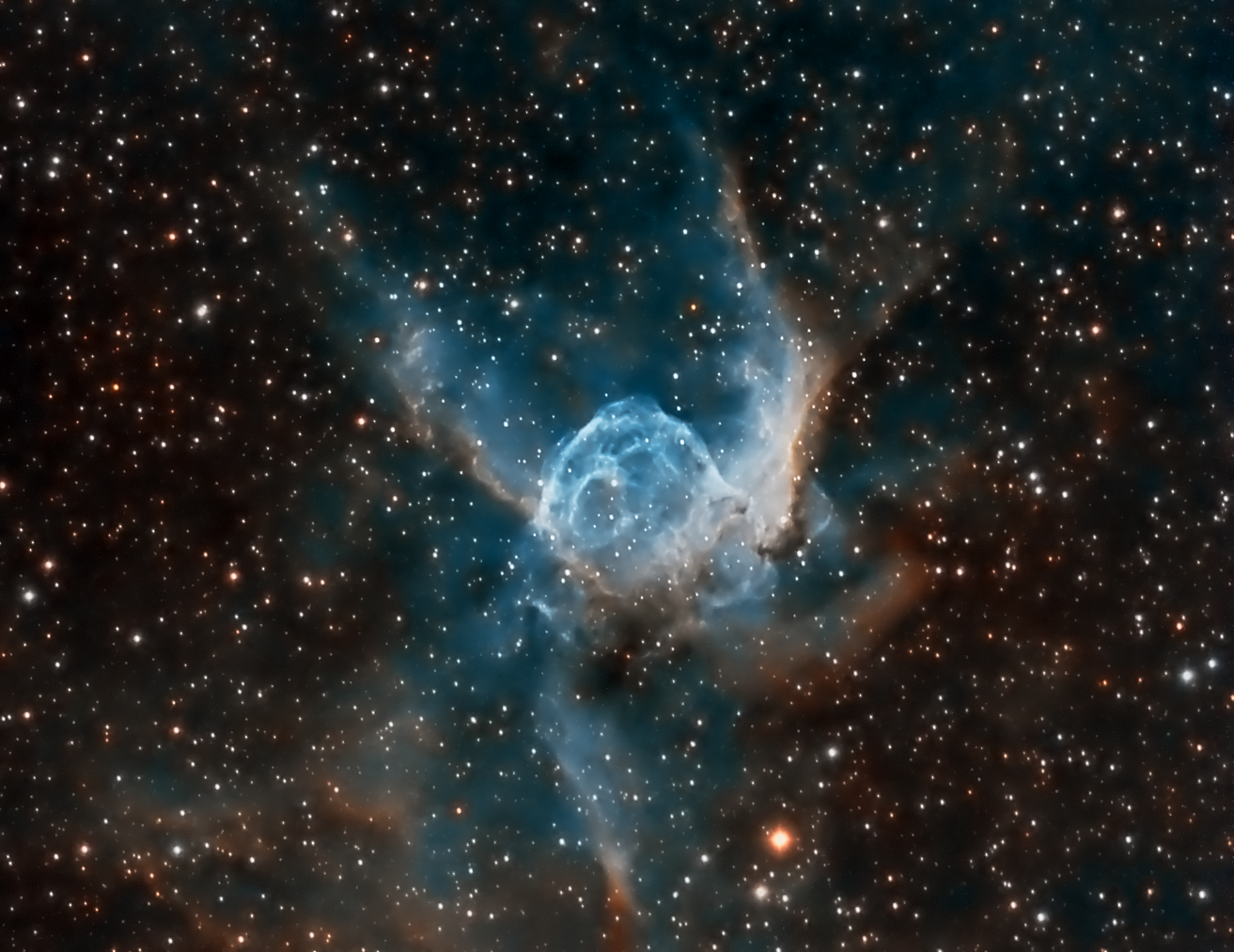
An interesting emission nebula 30 light years across. Imaged with narrowband filters.
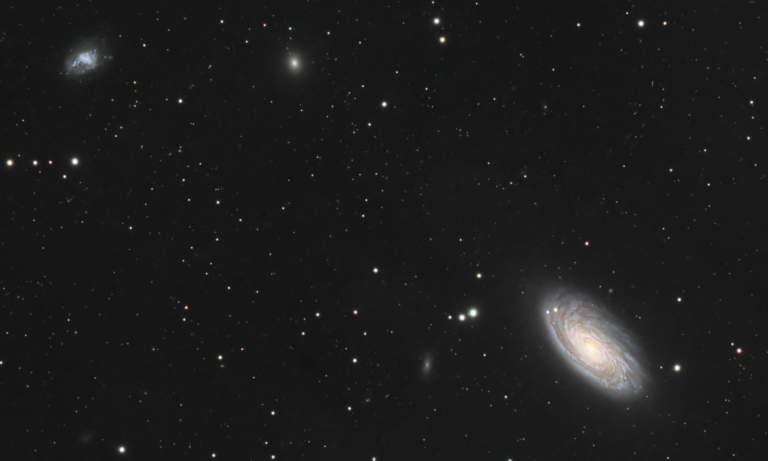
Messier 88, within the constellation Coma Berenices, is part of the nearby Virgo cluster of galaxies. And by “nearby”, I mean 50-60 million light years away! The light we’re seeing from this galaxy originated from the time of the dinosaurs. Telescopes are really time machines. There are many other galaxies surrounding M88, both smaller and…
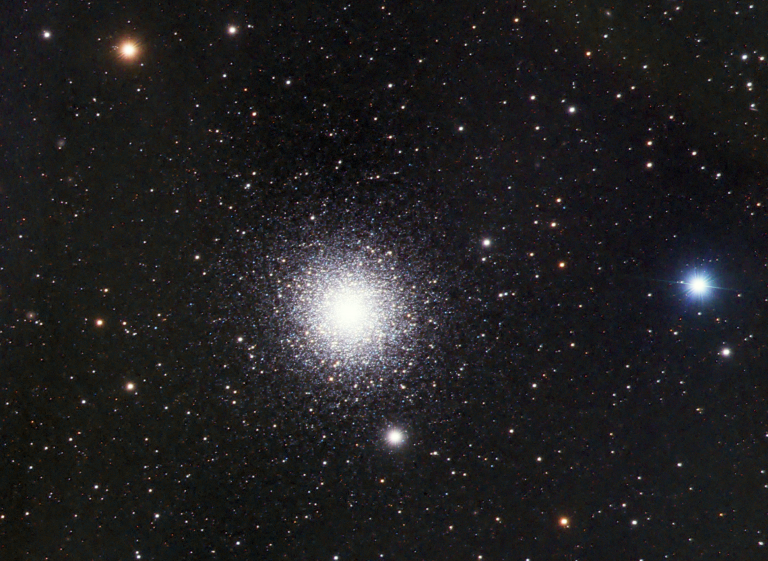
Located about 33,600 light-years away within the constellation Pegasus, Messier 15 is a globular cluster – a tight, ancient ball of stars on the outskirts of our galaxy. The Milky Way is surrounded by many such clusters; this one’s special because it’s known to host a rare intermediate-sized black hole at its center, and it…
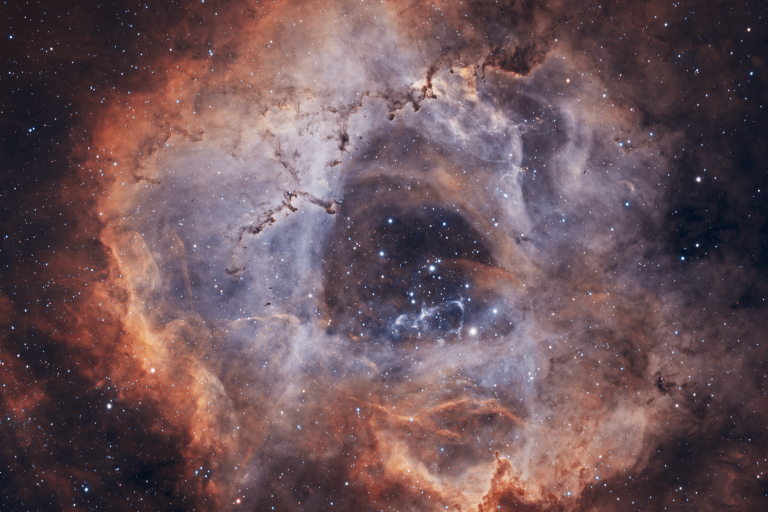
The Rosette Nebula is about 5,000 light-years away in the constellation Monoceros. It’s the birthplace of the cluster of stars it contains. While it doesn’t look much like a Rose in this view, the false-color narrowband image below brings out more of its structure. 7 1/2 hours of total exposure time, on New Year’s Eve…
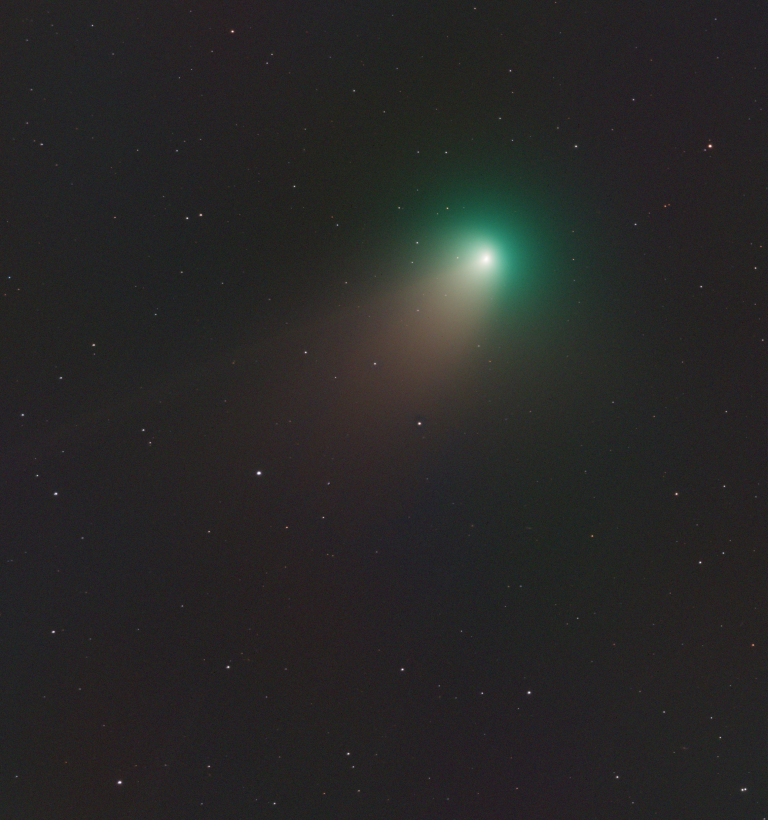
This comet will reach its brightest point a couple of weeks from now, but the skies were clear this morning so I figured I should go for it while I can! The tail’s not as pronounced as I hoped, and processing is a bit sloppy in a couple of spots. But hey, it’s a comet….
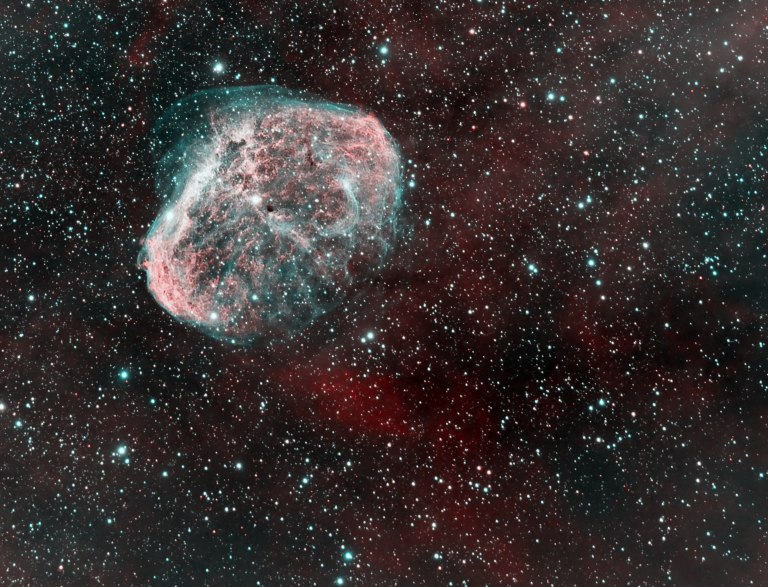
I’ve imaged this one before, but for whatever reason I picked up way more detail on it last night. Part of it’s a better camera and better tracking on the telescope mount, but I think conditions may have just been really awesome last night. It’s not normal to have this many good nights for astrophotography…
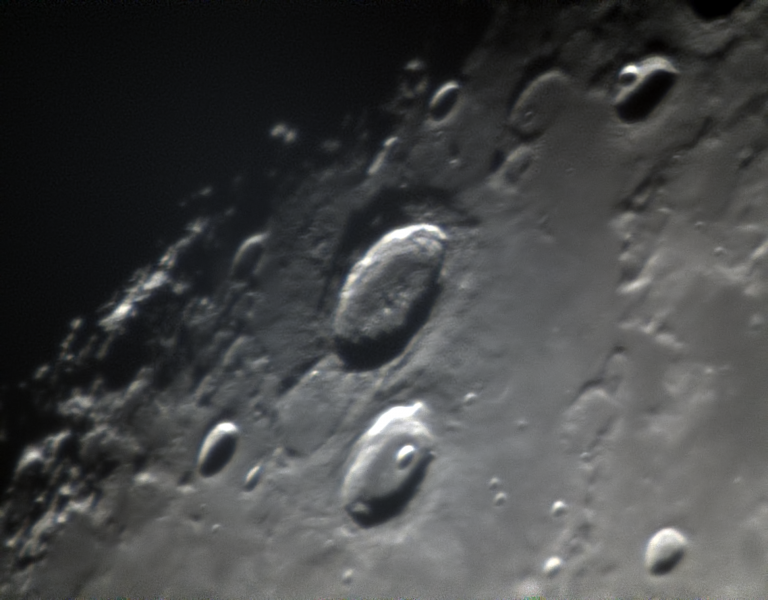
Imaging the planets requires completely different techniques and equipment than deep-sky stuff, and it’s something I’m not really good at yet. What matters the most is the seeing conditions – how stable the atmosphere is. A big part of taking good planetary images is just having the perseverance to get out there whenever the seeing…