
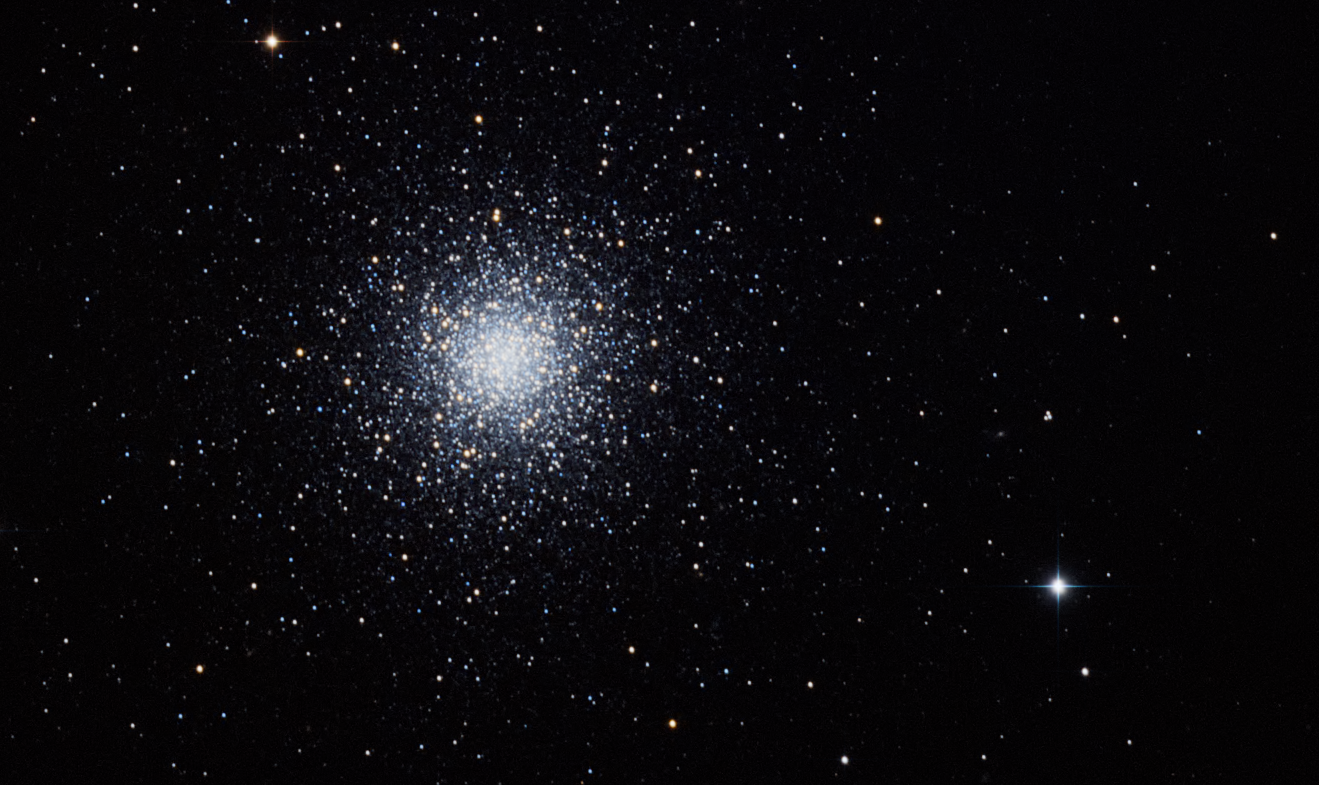
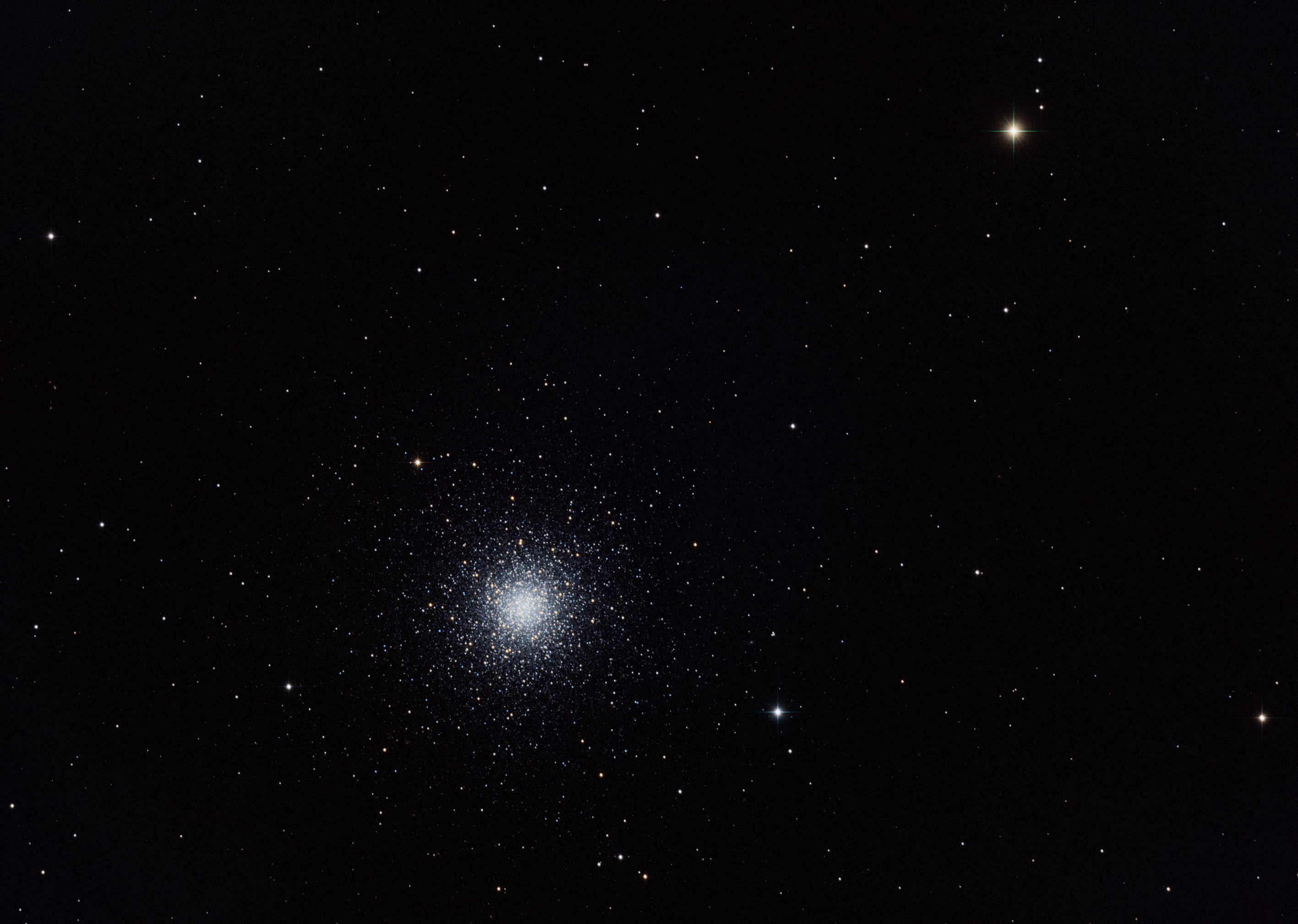
Globular Cluster M3
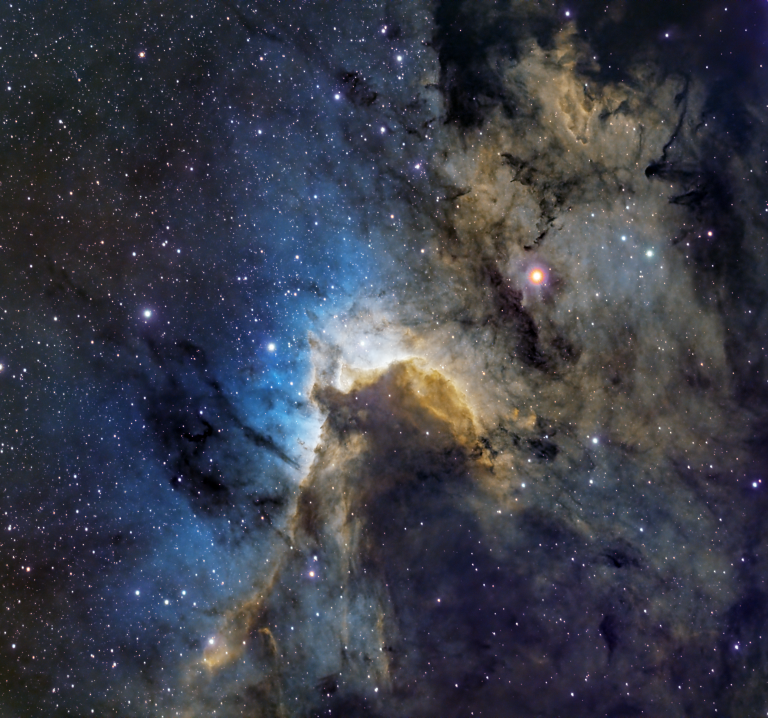
Formally SH2-155, the Cave Nebula lies about 2,400 light-years away within the constellation Cepheus. It’s part of a much larger region of gas and dust (called a molecular cloud). This region is mostly ionized Hydrogen, but there’s just enough Oxygen – blue in this image – to make for a pretty picture. Capturing that Oxygen…
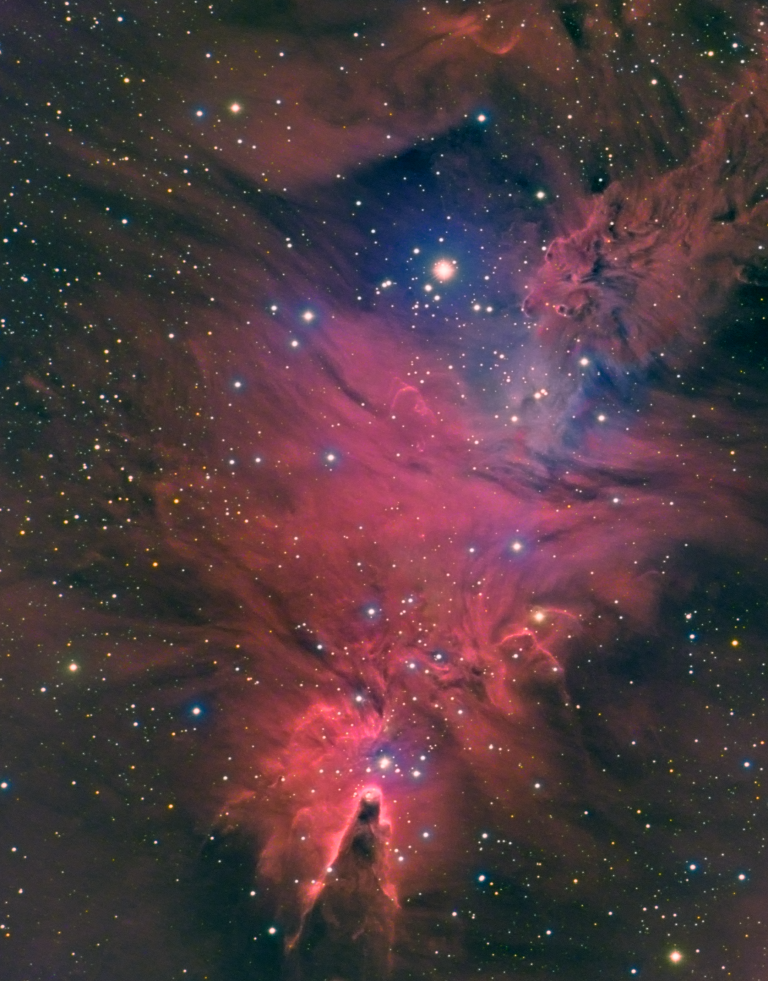
This image contains a few things! At the bottom is the Cone Nebula, at the upper-right is the “Fox Fur Nebula”, and in the middle is the “Christmas Tree” star cluster… you have to flip the image upside down to see that one. It’s a gorgeous region of active star formation in the constellation Monoceros….
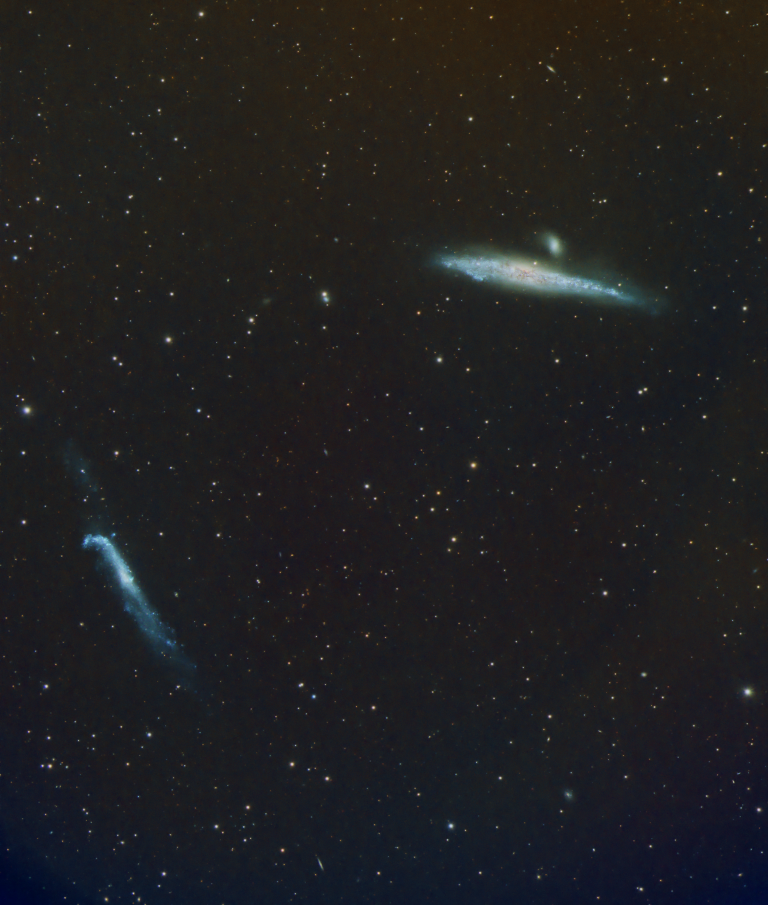
This pair of galaxies gets its name from their shapes. Both are viewed edge-on, and from this perspective we can see how a past interaction between the two warped them both. About 6 hours of exposure time from the backyard observatory.
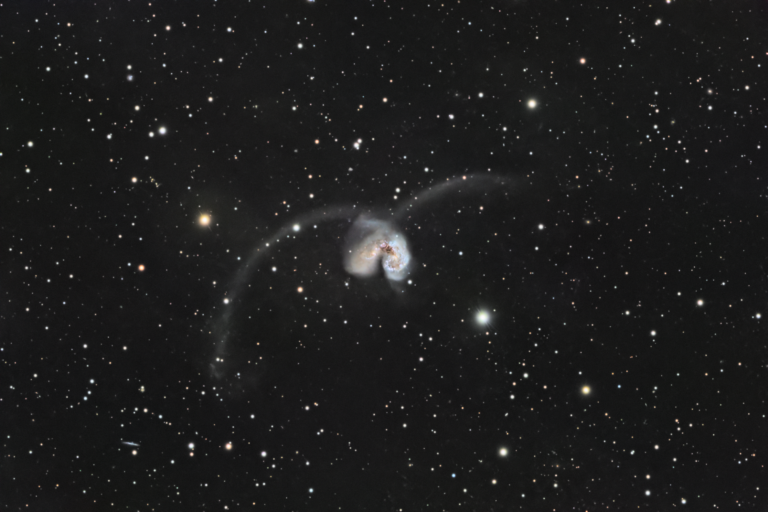
Within the constellation Corvus, two galaxies are close to merging together into one… leaving two tails behind from the original galaxies. About 45 million light-years away. Our own galaxy may suffer a similar fate, should it collide with the Andromeda Galaxy in the distant future.
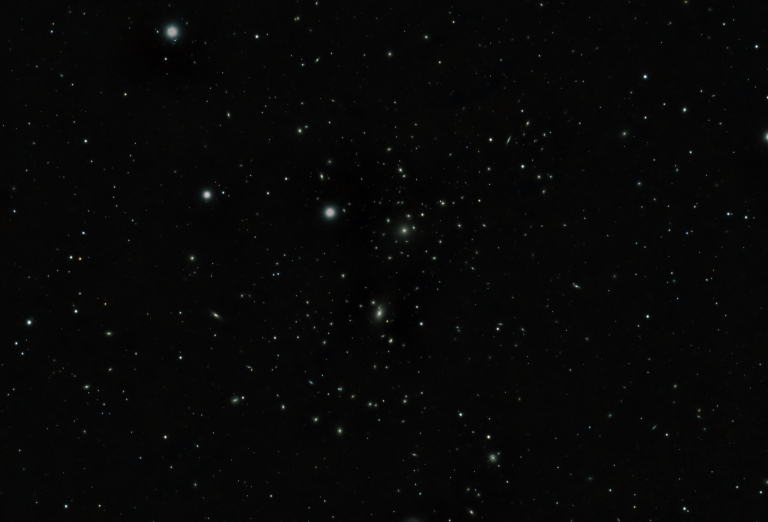
AKA Abell 1656. There are tens of thousands of galaxies in this portion of the sky; almost everything in this image is an entire galaxy filled with hundreds of millions of stars. Whoah. And they’re hundreds of millions of light-years away. Click and zoom in to explore them all.
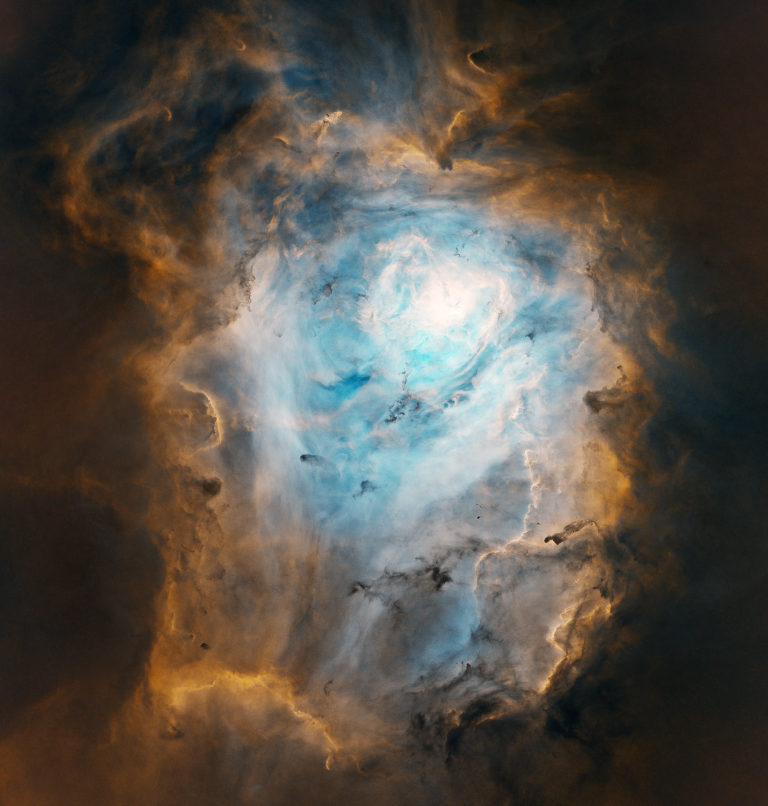
This is a bright, popular nebula deep within the summer Milky Way… but it’s low in the sky, and this is the first time I’ve been able to capture it above the trees. Still, short summer nights and cloudy summer weather present its challenges. Shown processed in the “Hubble palette” and an approximation of its…