Similar Posts
Globular Cluster M13
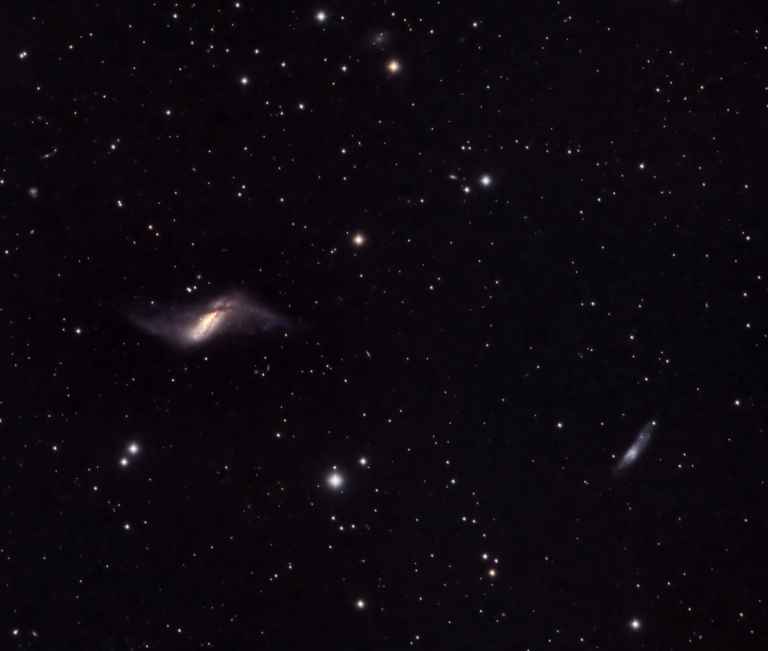
M13, the great globular cluster in Hercules. You can see some of its interesting neighbors, including the galaxy NGC 6207 in the lower-left. While M13 itself is 25,000 light-years away just above our galactic plane, NGC 6207 is 37 million light-years distant. About halfway between the two, the galaxy IC 4617 is also visible –…
The Eye of Sauron, revisited
This is the Helix Nebula, sometimes also called the “Eye of God” or the “Eye of Sauron”. It’s a planetary nebula, formed by a star blowing off its outer layers of gas before collapsing into the white dwarf you can see at its center. This is thought to be the ultimate fate of our own…
Orion’s Sword
If you look at the constellation Orion in the winter night’s sky, the center of Orion’s “sword” is not a star at all – it is the brightest nebula in our sky, M42 or the Great Nebula of Orion. Sitting right on top of it is technically another nebula designated M43, and above that is…
The Moon
Last weekend, I hosted an astrophotography workshop on lunar photography for our local astronomy club. Tonight the skies finally cleared, and I got to apply what was learned! Here’s our lunar neighbor, in hi-res glory.
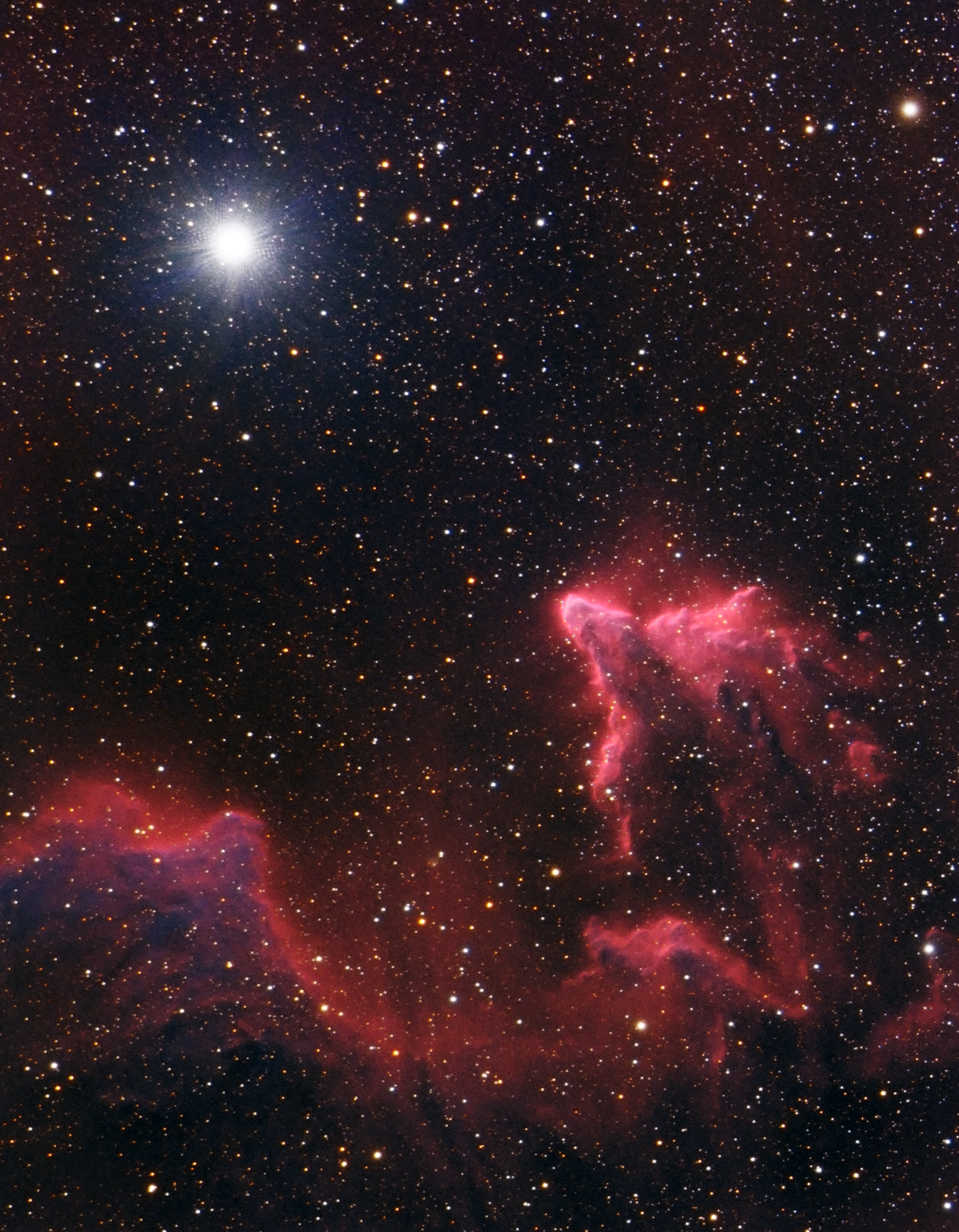
Just an obscure little cloud of hydrogen.
This nebula goes by the unassuming name of SH2-9. It’s part of a larger complex of clouds known as the Rho Ophiuchi complex, but you don’t often see people focusing on this part of it. It’s a challenge to image from my location, as it’s very low in the sky in a light-polluted direction. There…
The Dumbbell Nebula
The Dumbbell Nebula (M27) is what’s called a planetary nebula – but it has nothing to do with a planet. This shell of gas was blown out by a dying star; once it started to run out of Hydrogen to burn, it expanded and blew out the gases you see here. The star then collapsed…