
The Eye of Sauron
The Helix Nebula is also known as the Eye of Sauron or the Eye of God.
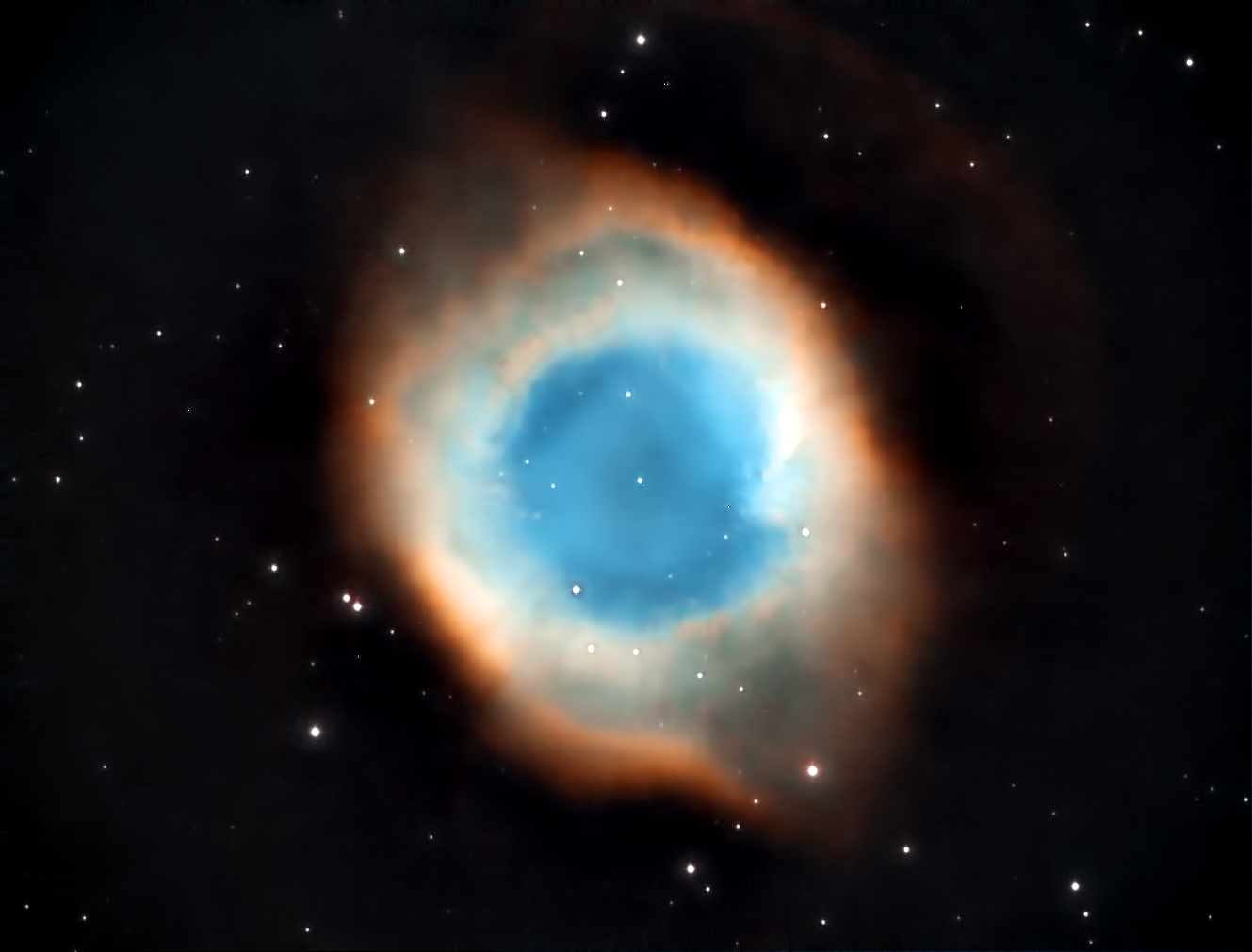
The Helix Nebula is also known as the Eye of Sauron or the Eye of God.
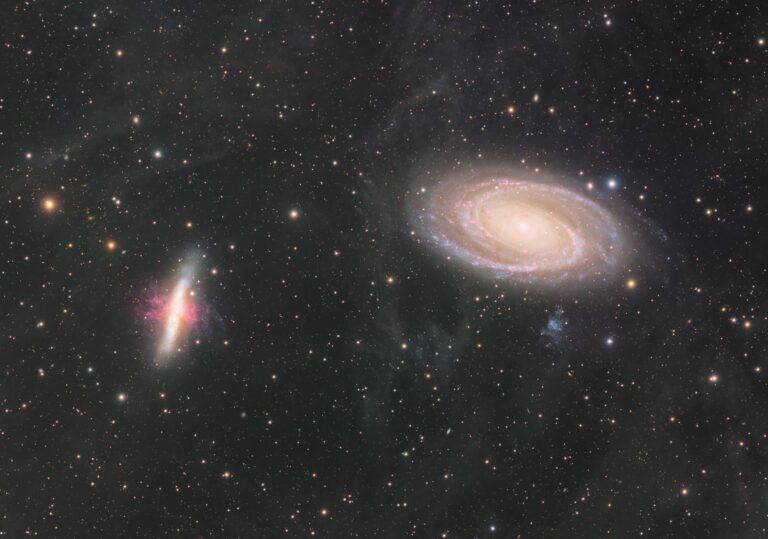
Here’s my latest image of M81 and M82, Bode’s Galaxy and the Cigar Galaxy, respectively – together they are sometimes called “Bode’s Galaxies.” I’ve imaged these many times over the years; in fact M81 was one of the very first deep sky objects I attempted to photograph like 10 years ago. I’m happy with this…
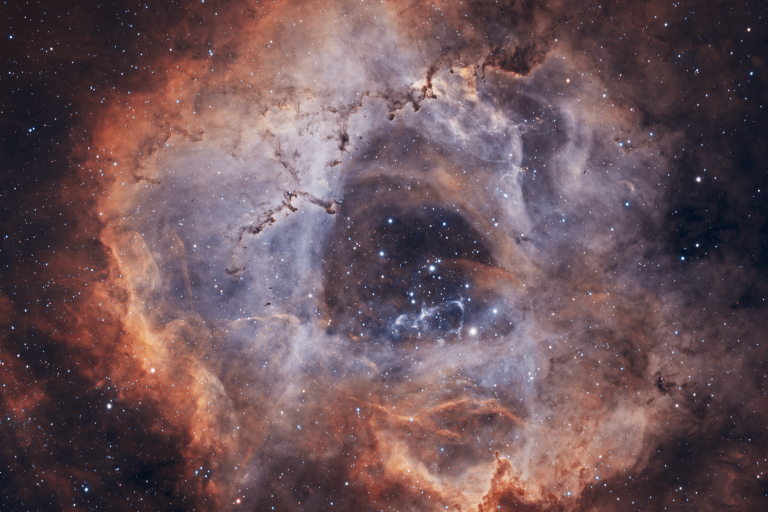
The Rosette Nebula is about 5,000 light-years away in the constellation Monoceros. It’s the birthplace of the cluster of stars it contains. While it doesn’t look much like a Rose in this view, the false-color narrowband image below brings out more of its structure. 7 1/2 hours of total exposure time, on New Year’s Eve…
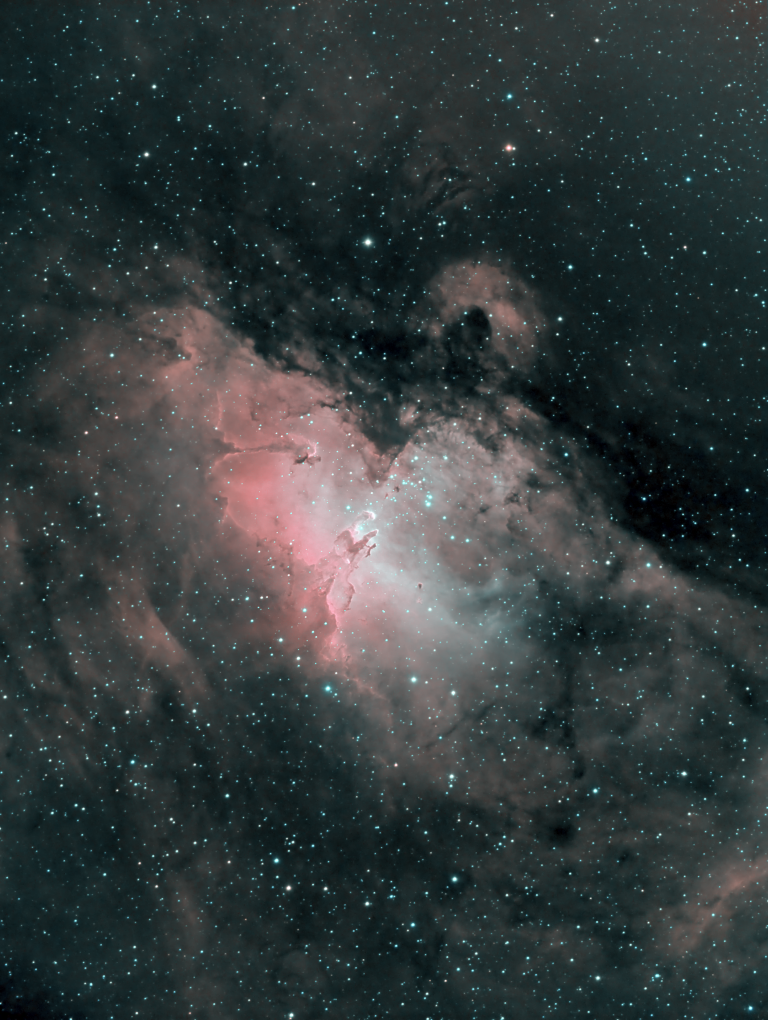
A wider shot of the Eagle Nebula, with the famous “pillars of creation” in its center.
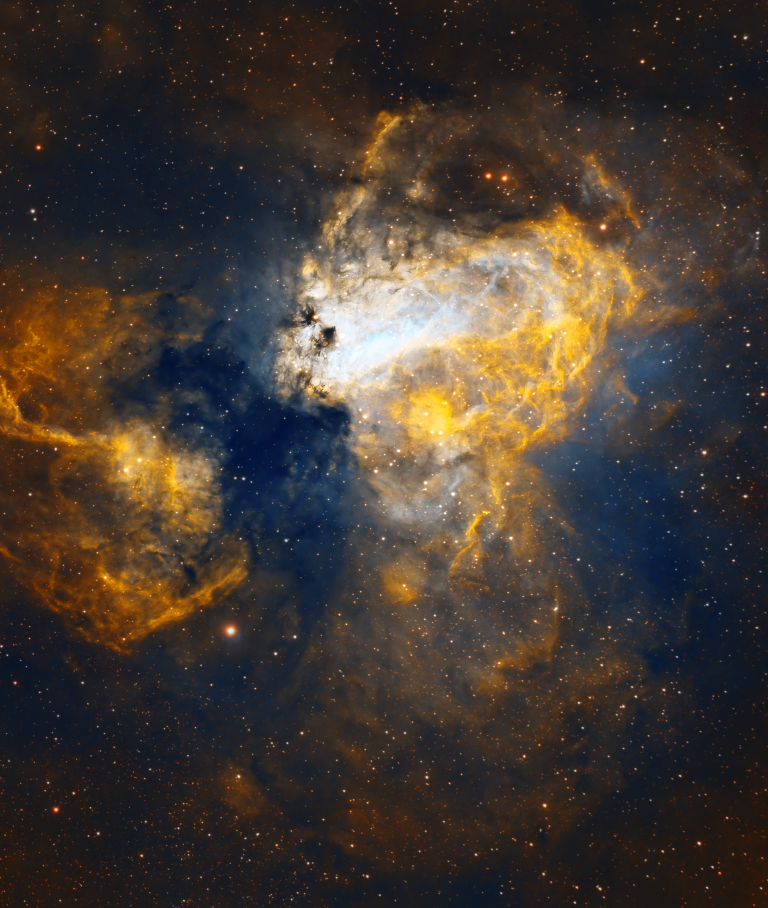
M17 is commonly known as the Swan Nebula or the Omega Nebula. From this angle, I think it looks more like a crab – but “Crab Nebula” was taken! Shot over a hazy summer night, with narrowband filters for the gases of the nebula itself, and RGB natural-color filters for the stars. Presented processed with…
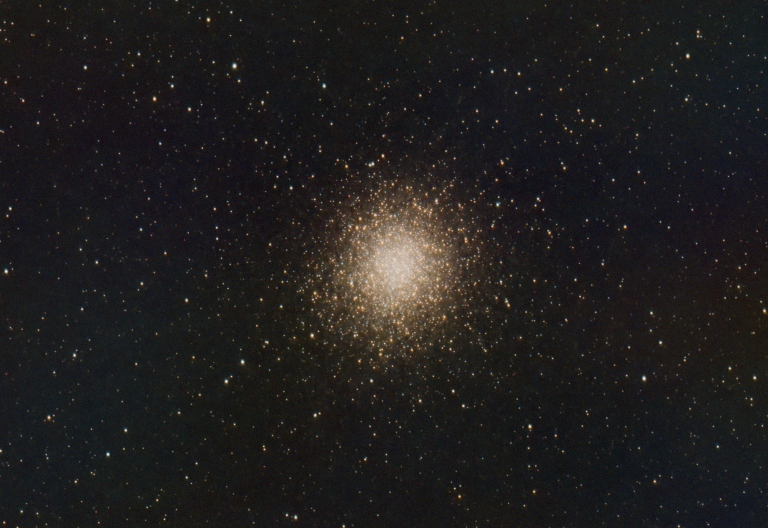
I’ve imaged this one before, but I keep coming back to it because I just can’t believe its golden color is real. But even after applying all I’ve learned about color calibration – I can say pretty definitely that these are its true colors. It’s also benefited from advances in image processing software, making the…
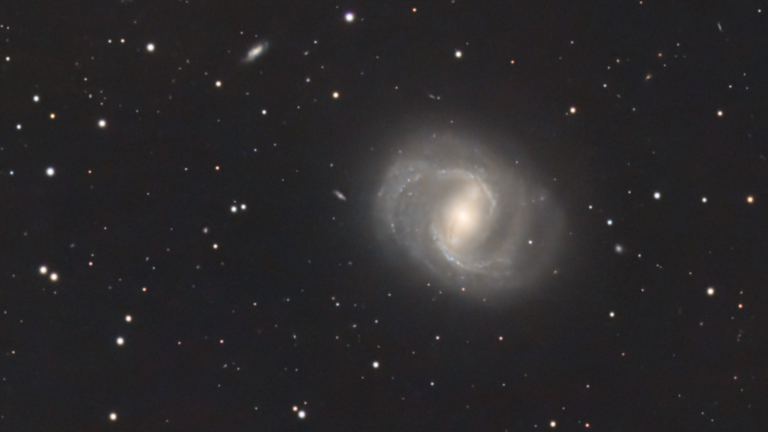
Located 63 million light-years away in the constellation Coma Berenices, M91 is part of the Virgo cluster of galaxies – and if you zoom in and explore this image, you’ll find many other galaxies surrounding it, and also far in the distance beyond it.